CHARLES GiLLET: HiS HiSTORy AND HiS CLASS i CS So much more than juSt that handSome gentlemen that we know and admire.
By Richard Marrs, photos by Shirlee Marrs and with permission from The BalTimore Sun
His History Those who have had the privilege of knowing Charles for even a short time, and those who have read the interview with Charles that is printed in the following pages, have a fairly good knowledge of his interest in and devotion to Classic Cars. Unknown to many is another dimension of his remarkable life that this article intends to reveal.
Charles is one of America's oldest living U.S. Navy Seals. (He may be the oldest; records are constantly changing). His Naval service began on his graduation from Yale University in the early 1940s, during the heaviest warfare of World War II. He was a champion swimmer at Yale and his military superiors were eager to exploit that talent in Naval underwater operations. He was soon on his way to Coronado, California where World War II Navy Frogmen were trained and where today, their successors, Navy Seals are trained.
At Coronado Charles underwent the toughest training and the most dangerous challenges of his young life. Even during World War II
when the need for men in uniform was in critical demand, only a small fraction of those aspiring to become Frogmen succeeded in passing the rigorous tests to certify their fitness for that specialized duty. And, they did much of it clothed in a scanty swimming outfit with large frog-like rubber feet. Today, about half of the Navy's 40,000 annual recruits want to be Seals. Only 6% of them possess the mental and physical skills to enter the program and just one in four of those end up passing the nearly impossible feats necessary to become a Seal.
Following his successful completion of training at Coronado, Charles was given a choice between serving in the European or the Pacifific theaters. As Charles remembers it, "I saw it as a choice between icy winter waters of the North Atlantic, and warm waters of the South Pacific. ThThe South Pacific was not a difficult choice to make."
Charles served with valor and distinction in the brutal U.S. Island Campaign leading towards the Japanese homeland up to the end of World War II and later during the Korean War.
In case you have not been informed about the exploits of Navy Frogmen, or Seals, here are just a few details. Prior to landing a fighting force on the shores of lands occupied by the enemy, it is necessary to know what that landing force is facing. Bitter experience of losses due to failed landing operations during the early stages of the war made clear the need to know exactly what awaits landing forces and to clear the way for them. Reconnaissance is necessary to determine the location and strength of the enemy, and the location of natural and erected obstacles and barriers, explosives, and other impediments to a successful landing. That is a job for Frogmen/Seals. Obstacles, barriers and explosives must be removed. That is a job for Frogmen/Seals. Maps of locations occupied by the enemy, and safe sea lanes must be created so that successful passage to landing sites can be navigated. That is a job for Frogmen/Seals. And, of course, the enemy knows that Frogmen/ Seals will be out there doing their job, and they are constantly searching for and determined to stop them.
Such was the daily life of Navy Frogmen/Seals such as Charles and his colleagues during World War II. If you think it is dangerous to be
part of a landing party, just think of the far greater dangers presented to those who go in ahead of such landings. Many other combat duties were assigned to Frogmen/Seals. Search-and-destroy missions in enemy harbors, in tunnels, on bridges, and against enemy vessels of all kinds are examples.
U. S. war strategy to defeat Japan relied heavily on what was referred to as Island hopping. The plan was to land on an island leading to Japan, destroy and drive away the Japanese forces occupying it, and establish a base for supporting the forward movement of troops to the next islands leading to Japan, and eventually to become bases for bombing and invading Japan. Japanese military leaders knew what was coming and they mounted fierce "fight to the death" battle tactics in efforts to repel all incoming forces. Americans reading their newspapers began to see that their sons were serving in places with names they had never heard of. Names like Guadalcanal, first major amphibious landing in the island-hopping campaign, Tarawa, Saipan, Leyte, Bougainville, Tinian, and later, in 1945,within 340 miles of the Japanese mainland, Iwo Jima (memorable for its flag raising by the Marines at Mount Suribachi), and Okinawa, became familiar in daily conversations about the war in the Pacific. You can easily see why the Marines' island landings were so critical to the to the defeat of Japan, and why Frogmen/Seals were so absolutely essential to the Marines' success.
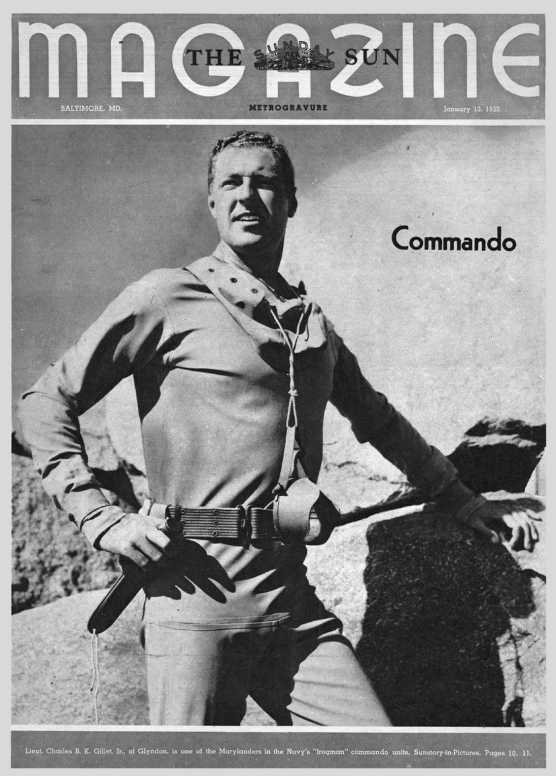
As a member of the U.S. Naval Reserves, Charles was called back into service with the outbreak of the Korean War. There he repeated his bravery and valor in support of successful landing operations and against North Korean enemy strongholds along the Korean peninsula. Following that service, he was featured on the cover and in an article in The Baltimore Sunday Sun Magazine on January 13, 1952. Charles has a penchant for exciting adventure. In the summer of 1958, he learned of a planned trans-ocean voyage by the square-rigged sailing ship, Albatross. This iron-hulled vessel, built as a schooner in the Netherlands in 1920 spent its early life in the North Sea and later as a possession of the German government. Eventually, after being rerigged as a Brigantine, it was purchased by famed writer Ernest K. Gann
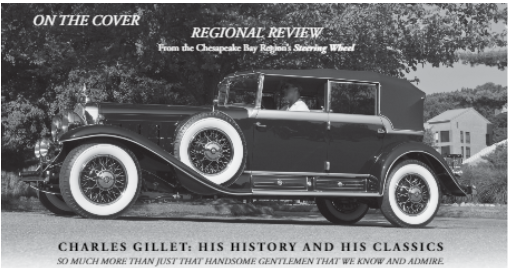
Opposite page: 1931 Cadillac 452A All-Weather Phaeton, Fleetwood. Below: Charles with his fellow Marylander, John Rinehart, in full battle gear and ready fo
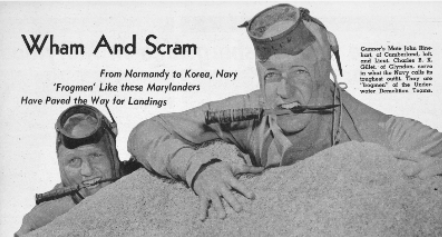
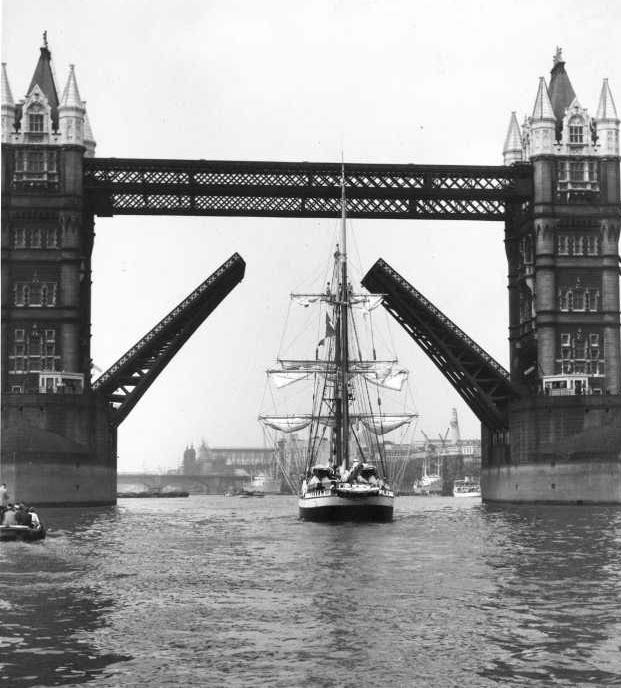
("Soldier of Fortune" and "The High and the Mighty", among others). Charles got in touch with Gann, who agreed to take him on for the trip. The challenging Atlantic Crossing from New York to London took three weeks. While sailing the ThThames in London, Charles was highly impressed when Tower Bridge was raised to accommodate the tall masts of the Albatross. The trip proceeded from London to Sweden to Norway, then on to Portugal, where Mr. Gann sold the ship. Two years later, the Albatross sadly went down in a rare and sudden burst of wind known as a white squall while sailing in the Gulf of Mexico. So now, you know at least some of the rest of the story. And also, you are even more convinced than ever that to know Charles Gillet is to know a truly remarkable American Hero.
His Classics Originally printed in 2007 in the Chesapeake Bay Region's 50th Anniversary Publication.
Charles Gillet's family has been in Maryland for over 200 years. Charles was born in Worthington Valley, heart of Maryland horse country. Near his birthplace is the famous Vanderbilt thoroughbred horse farm, home of the champion Native Dancer. His owner was Alfred G. Vanderbilt, perhaps best known in thoroughbred circles for promoting the showdown between War Admiral and Seabiscuit at Pimlico Racetrack in 1938.
After graduating from Yale Universtiy, Charles became Associate Editor of Road & Track magazine. It was an exciting job that involved testing the latest cars, sports and other models, and writing artides on their features and performance. Later, Charles was employed by the Baltimore News American, one of the two daily newspapers in Baltimore before television (and later the internet) took its toll on daily newspapers. Charles had a regular column entitled "Bay and Field" that reported on current Chesapeake Bay boating, the latest movies and television programs. While employed at the Baltimore News American, a friend who at the time owned a Volkswagen dealership in Towson, informed Charles that Volkswagen was looking for someone to open a dealership on the west side of Baltimore. He made the necessary contacts and after some negotiations, won the franchise. He decided to locate on Route 40 west in Catonsville and broke ground in the early summer of 1962, then opened the new 40 West Motors In the fall of that year. It was a success from the start, with orders for 100 cars taken on opening day. ThThe only problem was getting enough cars to sell. The Berlin Wall had gone up the previous year, and with the Wolfsburg factory just five miles from the East German border, half of Volkswagen's workers were lost over night as East German residents were forced to remain on the east side of the wall. You could order a car and get on the waiting list, but when your number came up you had to take whatever color came off the boat at that time.
Later, Charles had other dealerships near 40 West Motors that sold Porsche, Subaru, Mazda, Alfa Romeo and Saab. He also owned a Datsun (later renamed Nissan) dealership in Hawaii. In 1994, when he was happily running his dealerships on Route 40 west, a nearby Acura dealer came in and, as Charles puts it, made him an offer that even he could not refuse.
Charles always liked Bentley automobiles, and that got him interested in Classics. Through a British friend, he found his first Classic
in 1986, a 1934 Rolls-Royce 20/25 Gurney Nutting three-position drophead coupe. When he showed it at the CCCA annual meeting, it took a fifirst place in its class. Later, it was given the prized Lucius Beebe Memorial Trophy. Charles sold this car in what he describes as a mistake in judgment.
Charles's next Classic was his well-known 1926 Rolls-Royce Phantom I Barker-bodied Salamanca, originally owned by captain Lewinstein of Belgrade Square. When he first saw the car a friend of his in Oceanside, California owned it. Charles always enjoyed riding around Newport Beach with his friend and his wife and family of six children in this grand old Rolls-Royce but he was sure that his friend would never part with it. However, one day to his surprise and utter delight, his friend called and made it available to him. That may well have been one of the fastest car deals in history as Charles jumped
at the opportunity to own the car. It was shipped from California to White Post Restorations for a three-year makeover. It took first place at its post restoration debut, and has never lost a show since. Next came the purchase of his magnifificent 1931 Cadillac V-16
Fleetwood-bodied All-Weather Phaeton. He was talking to fellow Chesapeake Bay Region member Al Prueitt of his desire for a V-16 Cadillac. Al, with encyclopedic knowledge of all things Classic and his Fiddler-on-the-Roof penchant for match-making, told Charles that he knew of one that just might be for sale. Charles was introduced to another fellow CBR member, Ray Bowersox and another match was scored for Al Prueitt. After a four-year restoration at Al Prueitt and Sons, this wonderful car took Best of Show at its first competition in Castle Rock, Massachusetts.
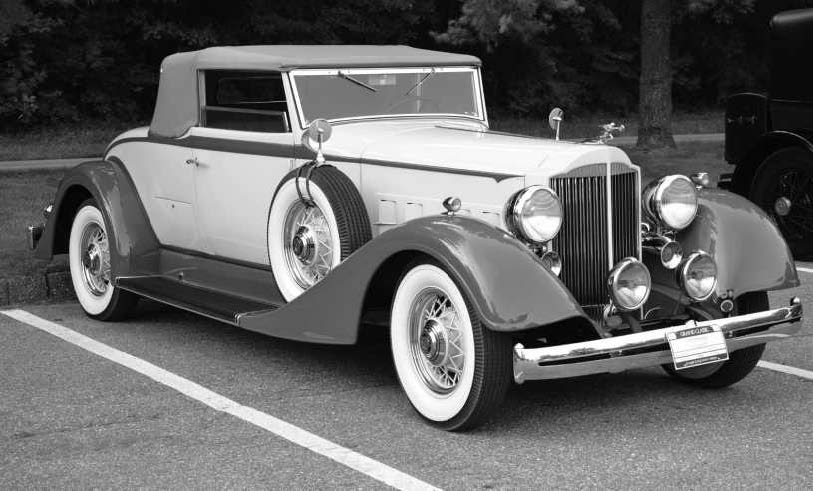
ThThe 1931 Cadillac Fleetwood convertible coupe came next. It was purchased in a private sale before a planned Kruse auction in Kansas. It also boasts a very high-point 1980s restoration from AI Prueitt and Sons. In addition to being a beautiful car, it is a wonderful runner and driver. Charles's 1934 Packard 1101 coupe roadster with its striking twotone green exterior has been the subject of some controversy over the years. It was purchased from another CBR member near Washington, D.C. After a full restoration by AI Prueitt and Sons, it was judged at 100 points in two successive competitions. On the next competition, one of the judges claimed that the car was not a factory roadster, but a coupe that had been converted to a roadster. Not to worry, after ten years of research and proof, this alleged Liza Doolittle masquerade was put to rest and the cloud over its authenticity was removed. In 2005, it scored 100 points at the Annual Meeting in St. Louis, Missouri.
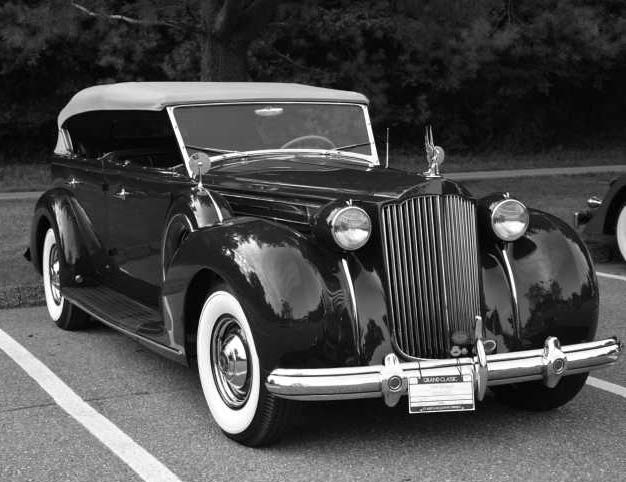
ThThe 1938 Packard Twelve Phaeton by Derham was built for Matthew McCloskey of Palm Beach, Florida and the well known McCloskey Construction Company of Philadelphia. Charles has the complete history of this car, along with some highly interesting memorabilia. When the Derham Company ordered the chassis and fenders from Packard, they were advised by letter from Packard to begin the build only after demanding a large deposit to insure that the purchaser would complete the deal when the car was finished. Charles has that letter,and of course, anyone with knowledge of the McCloskey's would not dare demand a deposit as security for completing a deal.
Charles has competed with his fine stable of Classics all over the country. He has won at Pebble Beach, Amelia Island, several CCCA Annual Meetings, and numerous Grand Classics and Concours. His cars always measure up against the best, often topping the list of prize winners. Fortunately for the Chesapeake Bay Region, he can always be counted on to support and add class to each of our regional events.
Opposite page, from top: ThThe Albatross passing through tower Bridge; 1934 Packard 1101 Coupe Roadster.
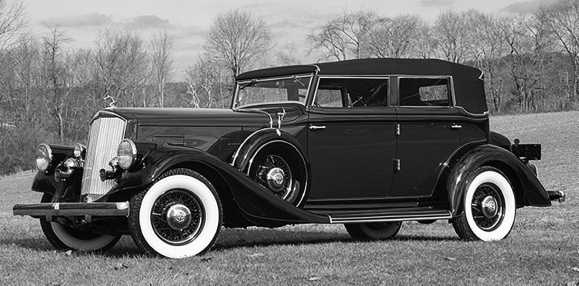
Near left: The one-off 1938 Packard 1608 touring, derham. Above, top and bottom: From the Baltimore Sunday Sun Magazine, January 13, 1952. The Pierce-arrow: originally purchased by Jean Ralston Peacock in new York City and gifted to her son Alex, who owned it until 1949. Thereafter, owned by several different collectors. In 1973 it won the Vanderveer trophy, the Pierce-arrow Society's top award. Purchased by Mr. Gillett in 2013, who commissioned Prueitt auto Restorations to authentically restore it to its original condition, it is beautifully finished in Pierce-arrow green and black with complementing leather interior. a few of this Pierce-arrows awards: Winner of the Best of Show award at the national Pierce-arrow Society Meeting in 2015, Best of Show at Radnor hunt Concours, the don Gilmour award (Museum Chairman's Choice) at the CCCa Museum experience, aaCa 1st Junior award at hershey and aaCa national award.